New Construction Homes in Winston-Salem & the Triad
You walk into a model home and it feels perfect. But the agent sitting at the desk works for the builder — not for you. Before you sign a registration sheet or talk numbers, you need someone whose job is to protect your deposit, your timeline, and your right to negotiate. That costs you nothing extra. But you have to do it before your first visit.

The model-home agent doesn't work for you
That agent at the model home? They're paid by the builder. Their job is to sell the builder's inventory at the builder's price on the builder's timeline. They will be perfectly pleasant. They may even be helpful. But their legal obligation is to the builder — not to you.
Here's what most buyers don't realize until it's too late: if you walk into a new-construction sales center without your own agent and sign the builder's registration sheet, you may have just waived your right to have your own representation on that purchase. Builders track who brought the buyer. If no agent is registered on your first visit, the builder's agent becomes your only point of contact — and the builder keeps the commission that would have paid for your advocate.
Rob's role is simple: he represents you. He reviews the builder's contract — which is not the standard North Carolina offer to purchase. He negotiates incentives, monitors construction timelines, coordinates inspections, and makes sure the builder delivers what was promised. This costs you nothing additional. The builder pays Rob's commission whether you have your own agent or not. The only difference is whether that money goes to someone working for you, or stays with the builder's team.
DO THIS BEFORE YOU TOUR
Before you visit any model home or new-construction sales center, text or call Rob at (919) 656-4500. He will register as your agent before you walk in. This takes two minutes and protects your right to representation for the entire purchase. Once you've signed the builder's sheet without an agent, it may be too late.
Where new construction is actually happening in the Triad
Kernersville
The largest concentration of active new-construction communities in the Triad. Caleb's Creek, Welden Village, and several smaller developments offer everything from traditional suburban layouts to walkable town-center designs. Builders are active and inventory is moving.
Clemmons
New construction in Clemmons tends toward move-up and premium price points. Communities here draw buyers who want newer construction without leaving the Clemmons school district and established retail corridors.
Advance & Bermuda Run
Davie County's new-construction corridor. Buyers here are often choosing between the amenity-heavy Bermuda Run lifestyle and the more spread-out, acreage-adjacent parcels in Advance. Builder incentives in this market can be significant.
Winston-Salem
New construction inside Winston-Salem city limits is more scattered — infill projects, townhome developments, and smaller-scale communities rather than the massive master-planned subdivisions on the outskirts. Buyers need to evaluate location-by-location.
Lewisville & Pfafftown
Pockets of new construction appear here periodically, often smaller custom-builder projects rather than large production-builder communities. These areas appeal to buyers who want newer construction with a more rural or semi-rural setting.
Walkertown & Surrounding Areas
Emerging new-construction activity on the eastern and northern edges of the Triad. Smaller communities, often with competitive pricing compared to the more established corridors. Worth watching for buyers whose budget stretches further outside the core.
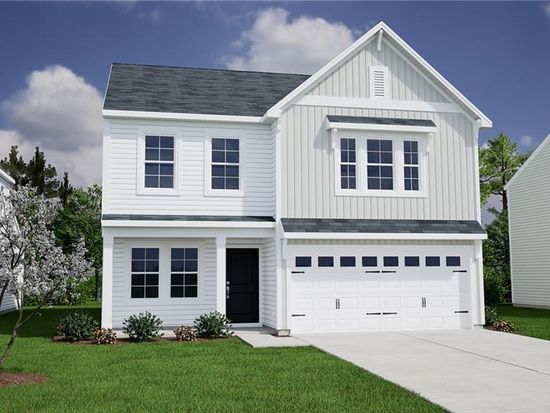
New Construction Home Sold by Rob Herald
The honest math: incentives, upgrades & the design center
Builder incentives can be worth tens of thousands — but they come with strings
Builders routinely offer rate buydowns, closing cost credits, and design center allowances — but usually only if you use the builder's preferred lender. Rob helps you calculate whether the incentive package actually saves you money, or whether the higher interest rate and inflated base price offset the savings.
The design center is where budgets go to die
The model home you toured has $80,000 to $120,000 in upgrades. The base price doesn't include most of what made you fall in love with that model. Flooring, countertops, cabinet hardware, lighting, landscaping, blinds, appliances — these are all line items the builder quotes separately. Rob helps buyers build realistic budgets before they sit down in the design center, not after.
Base price is not your price
The number on the builder's website is the starting point — the most basic elevation on the least desirable lot. Once you add lot premium, structural options, elevation upgrades, and design center selections, the real number is typically 10% to 25% higher. Rob builds budgets backward: what monthly payment are you comfortable with after the upgrades you actually want?
New does not mean flawless — you still inspect
Pre-Drywall Inspection
Before the walls go up, an independent inspector walks the framing, electrical rough-in, plumbing, and HVAC layout. This is your one chance to catch structural and mechanical issues while they're still visible and fixable. Once drywall covers it, you're trusting that everything behind the wall was done right.
Final Walkthrough & Punch List
Before closing, you and Rob walk the finished home with a detailed punch list. Every cosmetic defect, mechanical issue, and unfinished item gets documented. Builders want to close on their timeline — your leverage to get punch list items completed is highest before you sign, not after you've moved in.
11-Month Warranty Inspection
Most builders offer a one-year structural warranty. At month 11, hire an inspector to document any issues — settling cracks, HVAC performance, grading and drainage, appliance function — before the warranty expires. This is your last opportunity to have the builder address defects at their expense.
The builder's contract is not the standard NC contract
The builder's purchase agreement is not the standard North Carolina Offer to Purchase and Contract. It's a custom document written by the builder's attorneys, and it overwhelmingly favors the builder. Before you sign it, Rob reviews every clause with you.
- Earnest money
Builders often require larger deposits than resale transactions. Know exactly what's refundable and what conditions trigger forfeiture before you write the check.
- Completion dates
Builder contracts typically estimate a completion window, not a guaranteed date. Delays happen. Your contract should address what happens when the timeline slips and what costs you bear during the delay.
- Change orders
Once construction starts, changes cost money. The contract should specify how change orders are priced, approved, and documented. Verbal agreements with your project manager are not enforceable.
- Inspection rights
Some builder contracts limit when and how you can inspect. Rob ensures your contract preserves your right to independent inspections at key construction milestones.
Rob has reviewed dozens of builder contracts across the Triad. He knows which clauses to push back on, which timelines are realistic, and where buyers most commonly lose leverage. The builder's sales agent will tell you the contract is standard. It is — for the builder.
Spec home or build-to-order — which fits you?
Spec / Inventory Homes
A spec home is already built or under construction — the builder chose the lot, elevation, and most of the finishes. You get speed: these homes are typically available within 30 to 90 days. The trade-off is fewer choices. You're buying what the builder decided to build, not what you would have chosen. For buyers who need to move quickly or want to avoid the 8-to-12-month build timeline, spec homes are often the practical choice.
Build-to-Order
A build-to-order home starts from a lot selection and floor plan choice. You control the elevation, structural options, and design center finishes. The timeline is typically 8 to 12 months, sometimes longer depending on the builder and municipality. The trade-off is time and complexity — you're managing selections, change orders, and construction milestones over months. For buyers who know exactly what they want and have the patience, building to order gives you the most control.
Neither option is inherently better. It depends on your timeline, budget, and how much you care about choosing every finish yourself. Rob helps buyers evaluate both paths honestly — including what the builder won't tell you about the real costs of build-to-order upgrades.
What working with Rob on a new build looks like
Before You Tour
Text or call Rob before you visit any model home. He registers as your agent, protecting your right to representation for the entire transaction.
Choosing a Community
Rob tours communities with you, comparing builders, lot positions, HOA structures, and school assignments — not just price per square foot.
Contract & Incentives
Rob reviews the builder's contract, negotiates incentives, and makes sure you understand every financial commitment before you sign.
During the Build
Rob coordinates pre-drywall and final inspections, monitors construction progress, and addresses issues with the builder's team directly.
Closing & After
Rob walks the final punch list, ensures all contractual obligations are met, and reminds you to schedule your 11-month warranty inspection.
"Rob told us to call him before we visited any model homes. We almost didn't — we figured we'd just look around first. Glad we listened. The builder's agent had already started paperwork when Rob showed up and introduced himself as our agent. We had no idea that signing the guest register could have locked us out of having our own representation."
— New construction buyer, Kernersville
(Placeholder — Rob to replace with actual client testimonial)
Frequently asked questions about new construction
Do I need my own real estate agent for new construction?
Yes. The agent in the model home works for the builder. Their job is to sell the builder's homes at the builder's price. Having your own agent costs you nothing extra — the builder pays the buyer's agent commission regardless. The difference is whether that commission goes to someone representing your interests or stays with the builder's team.
Does it cost me more to use my own agent?
No. The builder factors buyer agent compensation into the home's price. Whether you bring your own agent or not, the cost structure is the same. The only question is whether you have someone at the table whose legal obligation is to protect you.
I already visited a model home without an agent. Is it too late?
Maybe not — but you need to act quickly. Some builders have strict registration policies. If you've already signed a guest registration, Rob can contact the builder's sales office to discuss representation. The sooner you reach out, the better your chances. Call Rob at (919) 656-4500.
Should I use the builder's preferred lender?
It depends. Builder incentives — rate buydowns, closing cost credits, design center allowances — are often tied to using their lender. Rob helps you compare: get a quote from the builder's lender and an independent lender, then calculate the total cost over 5 and 10 years. Sometimes the builder's package wins. Sometimes it doesn't. The math should decide, not the sales pressure.
Do I still need a home inspection on new construction?
Absolutely. New construction means no one has lived there yet — it does not mean everything was built correctly. Rob coordinates three key inspections: pre-drywall (before the walls go up), final walkthrough with punch list, and an 11-month warranty inspection before your builder warranty expires.
What is the 1-2-10 warranty?
Most builders offer a tiered warranty: 1 year on workmanship and materials, 2 years on mechanical systems (HVAC, plumbing, electrical), and 10 years on structural defects. The details vary by builder and warranty provider. Rob reviews the specific warranty terms with you before closing so you know exactly what's covered and what isn't.
What's the difference between a spec home and building to order?
A spec home is already built or under construction — you get speed but fewer choices. Build-to-order starts from scratch — you choose the lot, floor plan, and finishes, but the timeline is typically 8 to 12 months. Neither is inherently better. It depends on your timeline, budget, and how specific your preferences are.
Where is new construction actually happening in the Triad?
The heaviest activity is in Kernersville (Caleb's Creek, Welden Village), Clemmons, and the Advance/Bermuda Run corridor in Davie County. Winston-Salem has scattered infill and townhome projects. Smaller developments appear periodically in Lewisville, Pfafftown, and the eastern edges of the Triad. Rob covers all of these areas.
Talk to Rob before you sign anything
The builder's model home is designed to sell you a feeling. Rob's job is to make sure the contract, the timeline, the inspections, and the numbers match that feeling. One call before your first visit protects everything that comes after.
Or call Rob directly: (919) 656-4500
Not sure which area fits your budget and lifestyle? The Community Area Matcher asks 7 questions and covers all of Rob's service areas.
Take the Area Matcher →*Buyer representation is typically provided at no additional cost to the buyer. The builder pays the buyer's agent commission as part of the transaction. Specific terms may vary by builder and community. Rob will explain exactly how compensation works before you sign anything.